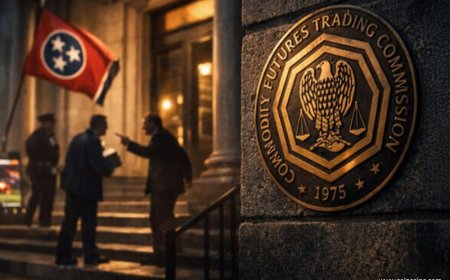
The case highlights ongoing efforts by U.S. authorities to crack down on crypto-related financial crimes.
Sewell pleaded guilty to wire fraud for defrauding at least 17 investors of about $2.9 million, spanning from December 2017 to April 2024. Prosecutors said he lured participants by misrepresenting his qualifications, education, and ability to generate high returns, convincing them to hand over funds he never invested as promised.
In a parallel case, Sewell also admitted operating an unlicensed money transmitting business — a service that converted bulk cash into cryptocurrency for third-party clients without proper registration. In total, that cash-to-crypto operation processed more than $5.4 million in transactions, including funds linked to criminal activity.
Restitution and Supervised Release
Alongside the prison term, the court ordered Sewell to pay over $3.8 million in restitution, covering losses suffered by investors, a mortgage lender, a credit union, and federal agencies. After his prison sentence, he will also serve three years of supervised release as part of the penalty.
A Broader Signal from U.S. Law Enforcement
Federal agencies including the FBI, IRS Criminal Investigation unit, and Homeland Security Investigations took part in the case, underscoring the priority placed on identifying and prosecuting crypto-linked fraud and unlicensed financial operations. Authorities noted that such schemes not only harm individual investors but also erode public trust in emerging digital financial services.
This conviction illustrates that even smaller, regional operators are not immune from enforcement when they misuse cryptocurrencies or exploit regulatory gaps to defraud others.