Washington’s hesitation on crypto regulation could cost the United States its global edge.
U.S. Senator Cynthia Lummis has issued a sharp warning that continued delays surrounding the Clarity Act may undermine America’s leadership in the rapidly evolving digital asset economy.
Speaking on the future of crypto policy, Lummis emphasized that regulatory uncertainty is pushing innovation overseas, while competing nations move quickly to establish clear rules for blockchain, stablecoins, and digital asset markets.
What Is the Clarity Act — and Why It Matters
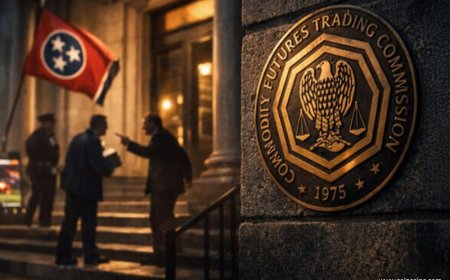
The Clarity Act is designed to define regulatory boundaries between U.S. agencies such as the SEC and CFTC, offering long-awaited guidance for crypto companies, investors, and developers.
According to Lummis, the lack of clarity has left the industry operating in a gray zone — creating confusion, compliance risks, and hesitation among businesses looking to build in the United States.
“Without clear rules, innovation stalls,” Lummis said, noting that capital, talent, and startups are increasingly relocating to crypto-friendly jurisdictions like Europe, the UAE, and parts of Asia.
Global Competition Is Accelerating
While the U.S. debates policy, other regions are moving forward decisively.
The European Union’s MiCA framework, along with crypto licensing regimes in Singapore and Hong Kong, are giving companies the certainty they need to scale.
Lummis warned that America risks becoming a follower instead of a leader if lawmakers fail to act.
“Crypto is not a future industry — it’s a current one,” she said. “The countries that lead today will shape global financial infrastructure for decades.”
Impact on Innovation and Investment
Industry analysts agree that prolonged regulatory delays could have serious consequences:
- Reduced venture capital investment in U.S.-based crypto firms
- Slower blockchain innovation and infrastructure development
- Job losses as companies expand abroad
- Declining influence over global crypto standards
Lummis stressed that the Clarity Act is not about deregulation, but about smart regulation — protecting consumers while allowing responsible innovation to thrive.
Bipartisan Support — But Slow Progress
Despite bipartisan acknowledgment of the problem, progress on the Clarity Act has been sluggish.
Political gridlock, competing legislative priorities, and differing views on enforcement have stalled momentum.
Lummis urged lawmakers to recognize the urgency, stating that regulation by enforcement is not a sustainable strategy and only increases uncertainty.
“Clear laws beat unclear lawsuits every time,” she added.
A Turning Point for U.S. Crypto Policy
The senator’s comments come at a pivotal moment as:
- Bitcoin and digital assets gain mainstream adoption
- Institutional players demand regulatory certainty
- States explore crypto-friendly legislation and reserves
- Global financial systems modernize using blockchain
If passed, the Clarity Act could provide a foundation for long-term crypto growth in the U.S., restoring confidence among developers, investors, and innovators.
Outlook: Lead or Lag Behind
Senator Lummis’ message is clear: delay has a cost.
As digital assets reshape finance, payments, and ownership, the U.S. must decide whether it wants to set the rules or follow them.
The coming months may determine whether America remains at the forefront of crypto innovation — or watches leadership shift elsewhere.