Markets
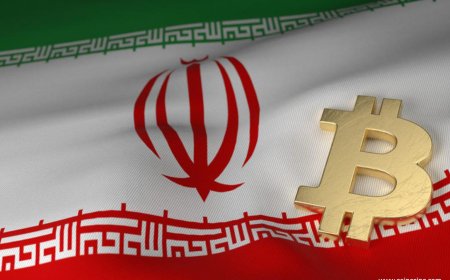
The U.S. sanctioned Shelbit and Aban Tether over alleged Iran and IRGC-linked crypto transactions, intensifying pressure on Tehran's digital finance networks.
U.S. Sanctions Two More Iranian Crypto Exchanges Over
Alleged IRGC Financial Links
The United States has expanded its crackdown on Iran's cryptocurrency infrastructure, with the U.S. Treasury Department's Office of Foreign Assets Control (OFAC) sanctioning Shelbit Exchange and Aban Tether over alleged involvement in moving funds connected to Iran's Islamic Revolutionary Guard Corps (IRGC) and sanctions-evasion networks.
The action adds another layer to Washington's broader "Economic Fury" campaign targeting Iranian financial networks and highlights the growing role of blockchain analytics in sanctions enforcement.
What Happened?
According to the U.S. Treasury, digital-asset wallets associated with the IRGC transferred more than $1 million to Shelbit, while more than $2 million moved from Shelbit-associated addresses to wallets linked to the IRGC. Treasury also identified more than $2 million in transfers from wallets controlled by Shelbit operator Siavash Kayvanpour to Nobitex, an Iranian exchange previously sanctioned by the United States.
The Treasury also designated Kayvanpour and several companies allegedly controlled by him across Georgia, Poland and the United Arab Emirates.
Aban Tether Also Targeted
The sanctions extend beyond Shelbit.
Aban Tether, an Iran-based crypto exchange, was also targeted by OFAC for alleged transactions involving sanctioned Iranian entities, including Nobitex. The move demonstrates that U.S. authorities are increasingly examining cryptocurrency exchanges as potential channels within broader financial networks.
The latest measures follow earlier U.S. sanctions against Nobitex and other Iran-linked entities.
Why Shelbit Is Under Heavy Scrutiny
The case has attracted additional attention because blockchain analytics firm TRM Labs reported that more than $6.3 billion in cryptocurrency flowed through Shelbit between May 2024 and March 2026. TRM described the exchange as an unlicensed settlement conduit rather than a conventional platform holding substantial customer balances.
Reuters has separately reported that Shelbit was allegedly involved in a much larger network connected to Iranian sanctions evasion. Shelbit has denied involvement in money laundering or illegal activity and has said its operations ceased in January 2026.
These allegations remain contested, and the reported transaction volumes should not automatically be interpreted as equivalent to illicit funds.
Treasury Expands "Economic Fury"
The latest sanctions are part of the Trump administration's Economic Fury campaign targeting Iranian financial infrastructure.
U.S. Treasury Secretary Scott Bessent said Iran's reliance on digital assets and shadow-banking networks demonstrates the importance of targeting alternative financial channels.
The strategy is broader than cryptocurrency, covering traditional financial networks as well as digital-asset infrastructure.
Why This Matters for Crypto
The action highlights an important reality for the cryptocurrency industry: blockchain transactions are increasingly becoming a source of evidence for financial enforcement.
Key implications
- Crypto exchanges face greater sanctions-screening obligations.
- Blockchain analytics are becoming increasingly important to governments.
- Offshore and unlicensed exchanges face heightened regulatory scrutiny.
- Stablecoins and other digital assets remain part of international sanctions investigations.
- Cross-border crypto businesses may face increased compliance costs.
The U.S. action also demonstrates that decentralization does not necessarily prevent governments from targeting centralized businesses and identifiable wallets operating around public blockchains.
Market Outlook
Positive Developments
Greater enforcement may discourage sanctioned entities from abusing legitimate crypto infrastructure.
Blockchain transparency can help investigators trace transactions.
Regulated exchanges have stronger incentives to improve sanctions screening.
The industry is developing more sophisticated compliance and analytics tools.
Risks
Geopolitical sanctions could increase regulatory uncertainty for crypto companies.
Exchanges operating across multiple jurisdictions may face conflicting requirements.
Stablecoins could face additional scrutiny because of their use in cross-border transactions.
Smaller offshore platforms may face increased enforcement pressure.
Bigger Picture: Crypto Is Becoming Part of Geopolitical Finance
The latest sanctions demonstrate how cryptocurrency has become increasingly connected to international financial policy.
Governments are now using blockchain intelligence to investigate:
- Sanctions evasion
- Terrorist financing
- Money laundering
- Shadow banking
- Cross-border financial networks
At the same time, researchers have found that sanctions against blockchain addresses can reduce activity but may not completely eliminate attempts at evasion, particularly when actors use complex transaction routes and obfuscation techniques.
This means crypto regulation is increasingly moving beyond simple exchange licensing toward real-time transaction monitoring and blockchain intelligence.
What Investors and Exchanges Should Watch
The next developments could include:
- Additional U.S. sanctions against Iran-linked crypto entities.
- Further investigations into offshore exchanges.
- Increased scrutiny of stablecoin transactions.
- New blockchain analytics and compliance requirements.
- Responses from exchanges named in transaction investigations.
- Additional coordination between regulators and crypto companies.
For legitimate crypto businesses, sanctions compliance is becoming an increasingly important part of operating internationally.
Final Take
The U.S. Treasury's decision to sanction Shelbit Exchange and Aban Tether marks another significant escalation in Washington's effort to restrict Iran's access to digital-asset financial networks. U.S. authorities allege that the platforms facilitated transactions involving sanctioned Iranian entities and the IRGC, while independent blockchain analysis indicates that Shelbit processed billions of dollars in cryptocurrency transactions.
The story also illustrates a broader trend: crypto is no longer outside the reach of geopolitical financial enforcement. As blockchain analytics become more sophisticated, governments are increasingly capable of tracing digital-asset flows and targeting the businesses and wallets they believe are connected to illicit activity.