
Solana
South Korea's Toss Bank is testing a Solana-powered remittance network to improve cross-border payments with faster settlements, lower fees, and blockchain innovation.
South Korea's Toss Bank Tests Solana-Powered Remittance Network for Faster Global Payments
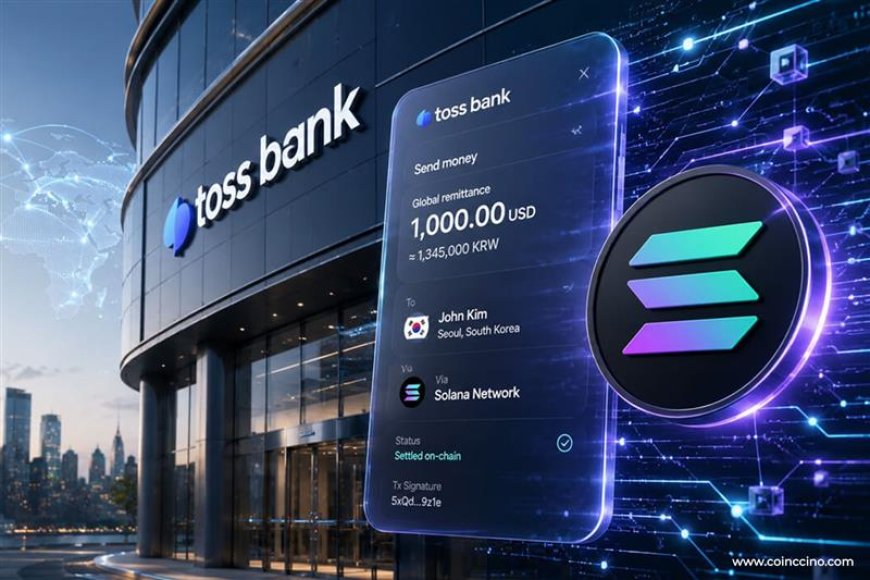
South Korea's Toss Bank is taking another step toward blockchain-powered finance by testing a cross-border remittance network built on the Solana blockchain. The pilot project aims to make international money transfers faster, cheaper, and more efficient than traditional banking systems.
The initiative reflects a growing trend among financial institutions exploring public blockchain networks to modernize payment infrastructure as demand for real-time global settlements continues to rise.
Toss Bank Explores Solana for Cross-Border Payments
According to reports, Toss Bank is evaluating Solana's high-speed blockchain as the foundation for an international remittance solution.
The pilot seeks to improve:
- Faster cross-border transactions
- Lower remittance costs
- Near-instant settlement
- Greater payment transparency
- Improved operational efficiency
If successful, the project could demonstrate how public blockchain networks can complement traditional banking services.
Why Solana?
Solana has emerged as one of the fastest public blockchain networks in the crypto industry.
Its key advantages include:
High-Speed Transactions
Solana is capable of processing thousands of transactions per second with low latency.
Low Transaction Fees
The network offers significantly lower fees compared to many traditional payment systems and some competing blockchains.
Global Accessibility
Operating as a decentralized blockchain, Solana enables international transactions without relying on multiple intermediary banks.
These features make it attractive for payment applications requiring speed and scalability.
How Blockchain Can Improve Remittances
Traditional international transfers often involve:
- Multiple correspondent banks
- Higher transaction fees
- Settlement delays
- Currency conversion costs
Blockchain-based payment systems aim to streamline this process by enabling direct settlement on distributed networks.
Potential benefits include:
- Faster transfers
- Reduced operational costs
- Real-time transaction tracking
- Greater financial accessibility
- Improved user experience
South Korea Continues Crypto Innovation
South Korea remains one of Asia's most active digital asset markets.
The country has seen increasing interest in:
- Digital payments
- Blockchain infrastructure
- Tokenized assets
- Central bank digital currency (CBDC) research
- Institutional crypto adoption
Financial institutions are increasingly exploring blockchain technology beyond cryptocurrency trading.
Institutional Adoption of Public Blockchains Grows
Banks worldwide are testing blockchain-based financial services.
Current areas of development include:
- Cross-border settlements
- Tokenized deposits
- Digital identity solutions
- Asset tokenization
- Trade finance
- International payments
The Toss Bank pilot reflects the growing confidence among financial institutions in blockchain infrastructure.
Could This Benefit Solana?
Although the pilot remains in the testing phase, increased institutional usage could strengthen Solana's ecosystem.
Potential long-term benefits include:
- Greater enterprise adoption
- Increased network activity
- Expanded developer ecosystem
- Higher visibility among financial institutions
- More real-world blockchain applications
However, commercial deployment will depend on regulatory approval and successful testing.
Challenges Still Remain
Despite the potential advantages, blockchain-based remittance networks must overcome several challenges.
These include:
- Financial regulations
- Compliance requirements
- Anti-money laundering (AML) standards
- Data privacy
- Banking integration
- Scalability under enterprise workloads
Successful implementation requires balancing innovation with regulatory compliance.
What Investors Should Watch
Key developments include:
- Results of Toss Bank's pilot program
- Regulatory approvals
- Expansion into commercial services
- Additional banking partnerships
- Solana ecosystem growth
- Cross-border payment adoption
These factors could influence blockchain adoption across the financial sector.
Final Thoughts
Toss Bank's decision to test a Solana-powered remittance network highlights the growing convergence of traditional finance and blockchain technology. As banks seek faster, more cost-effective payment solutions, public blockchain networks like Solana are increasingly being evaluated for enterprise use cases.
While the project is still in its pilot phase, it underscores a broader industry trend: blockchain is moving beyond speculative assets and becoming part of the next generation of global financial infrastructure.
(FAQs)
Why is Toss Bank testing Solana?
The bank aims to evaluate whether Solana can provide faster, lower-cost, and more efficient cross-border payment services.
What are the benefits of blockchain remittances?
Blockchain can reduce transaction costs, speed up settlements, improve transparency, and eliminate some intermediaries.
Is this a commercial launch?
No. The initiative is currently reported as a pilot test, and no full commercial rollout has been announced.
Could this increase Solana adoption?
If successful, institutional pilots like this could encourage broader enterprise adoption of the Solana blockchain.