$13B DeFi Liquidity Crash Shocks Crypto Market
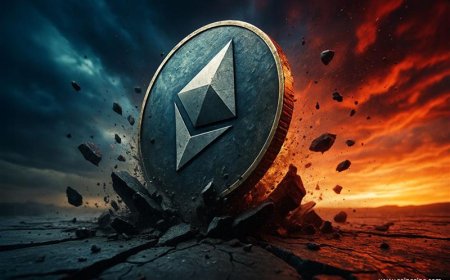
The DeFi liquidity crash has sent shockwaves across the crypto ecosystem, wiping out over $13 billion in total value locked (TVL) within just 48 hours.
The trigger? A massive $292 million exploit involving KelpDAO—raising serious concerns about cross-chain security risks and systemic vulnerabilities in decentralized finance.
What Happened: The KelpDAO Exploit Explained
At the center of this crisis is a sophisticated attack exploiting cross-chain infrastructure weaknesses.
Key Details:
- $292M exploit via compromised rsETH collateral
- Fake or under-collateralized assets used for borrowing
- Cross-platform contagion across DeFi protocols
Attackers leveraged flawed verification systems to borrow funds using assets that were not fully backed, triggering a cascading failure.
Think of it as borrowing billions using fake collateral—a nightmare scenario in any financial system.
Massive Outflows Hit DeFi Protocols
The immediate impact was a wave of panic withdrawals across major platforms.
Key Market Impact:
- DeFi TVL dropped from ~$99B → ~$86B
- Over $13B liquidity wiped out
- Lending and yield protocols saw double-digit declines
The speed of this crypto liquidity crisis highlights how fragile liquidity can be under stress.
Aave Leads the Collapse
The hardest hit platform was Aave, one of the largest lending protocols in the ecosystem.
Aave Impact:
- $8.45B in deposits withdrawn in 48 hours
- Lending markets temporarily disrupted
- User confidence shaken
Other platforms like Euler Finance also saw significant outflows, confirming system-wide stress.
Systemic Risk: The Real Problem Revealed
This event exposed a critical weakness in DeFi’s architecture.
Core Issue:
Cross-chain verification failure
Many protocols rely on shared collateral and integrations. When one layer fails:
- Risk spreads instantly
- Liquidity disappears rapidly
- Entire systems become unstable
Weak verification = ecosystem-wide vulnerability
Why Token Prices Stayed Stable
Surprisingly, major DeFi tokens did not crash significantly.
Price Reaction:
- AAVE: down ~2.5%
- UNI & LINK: down <1%
What This Means:
- Crisis is liquidity-driven, not valuation-driven
- Markets expect temporary disruption, not collapse
This divergence between TVL and price is a key insight for investors.
Interconnected DeFi: Strength or Weakness?
DeFi’s biggest advantage—interconnectivity—is also its biggest risk.
Key Risks Highlighted:
- Protocols depend on shared liquidity
- Cross-chain bridges amplify exposure
- Failures cascade بسرعة across systems
The more connected the system, the faster the contagion.
Market Outlook: What Happens Next?
Short-Term Outlook:
- Continued volatility
- Reduced trust in affected protocols
- withdrawals
Long-Term Outlook:
- Stronger security frameworks
- Improved collateral verification
- Institutional-grade risk management
This event could accelerate DeFi’s evolution toward more secure infrastructure.
Why This Matters for Crypto Investors
The DeFi liquidity crash is a wake-up call for investors and builders.
Key Takeaways:
- Liquidity can vanish quickly during panic
- Cross-chain risks remain underpriced
- Security is now the top priority
Smart investors will focus on risk management, not just returns.
Conclusion
The $13B DeFi liquidity crash triggered by the KelpDAO exploit is more than just another hack—it’s a stress test for the entire ecosystem.
While token prices remain relatively stable, the event exposes deep structural risks in cross-chain infrastructure and liquidity design.
As DeFi matures, these घटनाएँ will shape a more resilient and secure financial system—but only if the industry learns and adapts.
FAQs
1. What caused the DeFi liquidity crash?
A $292M exploit involving KelpDAO and compromised cross-chain collateral.
2. How much liquidity was lost?
Over $13 billion in total value locked within 48 hours.
3. Which platform was most affected?
Aave saw the largest outflows, losing over $8.45B in deposits.
4. Why didn’t token prices crash?
Because the crisis is liquidity-driven, not fundamentally valuation-driven.
5. What is the biggest risk exposed?
Weak cross-chain verification systems and interconnected protocol risks.
Disclaimer:
This content is for informational purposes only and not financial advice. Always conduct your own research before making investment decisions.