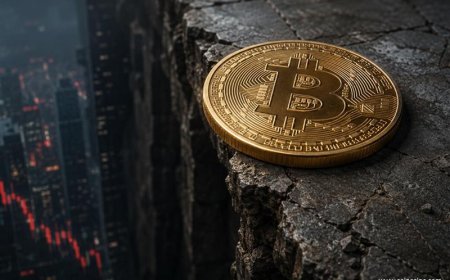
In a historic and controversial move, Iran has introduced a Bitcoin-based toll system for oil tankers passing through the Strait of Hormuz during a temporary two-week ceasefire with the United States. The policy requires ships to pay $1 per barrel in Bitcoin, marking the first known instance of a sovereign nation mandating cryptocurrency for access to a critical global trade route.
For a fully loaded supertanker carrying around 2 million barrels, the toll can reach nearly $2 million, payable almost instantly via Bitcoin. This development is being closely watched by global markets, as it tests Bitcoin’s real-world use as a neutral settlement asset under geopolitical pressure.
Why Iran Chose Bitcoin Over Stablecoins
Iran’s decision to use Bitcoin instead of stablecoins like USDT or USDC is strategic. Stablecoins are issued by centralized entities and include freeze mechanisms, allowing authorities—especially U.S. regulators—to block or seize funds.
Bitcoin, by contrast, is decentralized and censorship-resistant. Once a transaction is confirmed, it cannot be reversed or frozen. For a heavily sanctioned country like Iran, this makes Bitcoin a far more reliable tool for collecting revenue without external interference.
How the Bitcoin Toll System Works
The system is operationally simple but highly controlled:
- Ship operators email Iranian authorities with cargo and vessel details
- Iran calculates the toll at $1 per barrel
- Ships receive a Bitcoin payment instruction
- Payment must be completed within seconds
Iran also applies a five-tier nationality system:
- Ships linked to the U.S. or Israel are denied passage
- Friendly nations receive discounted rates
- Empty tankers pass free
With 100–120 vessels typically crossing daily, Iran could generate over $20 million per day, potentially reaching $800 million monthly if expanded to LNG shipments.
Bitcoin’s “Neutral Asset” Thesis Gets Real
This move provides one of the strongest real-world validations of Bitcoin as a neutral global payment system. Unlike fiat currencies or stablecoins, Bitcoin operates outside the control of any government.
Countries not directly involved in the conflict are now using BTC to facilitate essential trade—oil transport—highlighting its role beyond speculation and into global economic infrastructure.
Risks and Geopolitical Implications
Despite its innovation, the system carries significant risks:
- Companies using it may face secondary U.S. sanctions
- The ceasefire remains fragile, with reported violations
- A collapse in negotiations could disrupt the system entirely
If tensions escalate, the toll system could disappear overnight, potentially triggering short-term volatility in Bitcoin markets.
TL;DR
- Iran charges $1 per barrel in Bitcoin for Hormuz passage
- Super tankers may pay up to $2 million per trip
- Bitcoin chosen over stablecoins due to no freeze risk
- Marks first sovereign use of crypto for global trade access
- Raises both adoption potential and regulatory concerns
FAQs
1. How much Bitcoin does Iran have?
There is no exact public figure, but Iran’s broader crypto ecosystem is estimated at $7.8 billion, with significant government-linked involvement.
2. Why not use USDT or USDC?
Stablecoins can be frozen or seized by issuers under regulatory pressure, while Bitcoin transactions are irreversible and censorship-resistant.
3. Are ships still passing through the Strait of Hormuz?
Yes, but traffic has dropped significantly due to rising tensions and the new toll system.
4. Is this legal for shipping companies?
It exists in a legal grey area. Companies risk secondary sanctions, especially from U.S. authorities.
5. What does this mean for Bitcoin’s future?
It strengthens Bitcoin’s case as a global neutral asset, but also invites greater regulatory scrutiny worldwide.
Disclaimer:
This content is for informational purposes only and not financial advice. Always conduct your own research before making investment decisions.
MORE NEWS