India USDT Premium Surges Above 8.5% as Stablecoin Supply Tightens
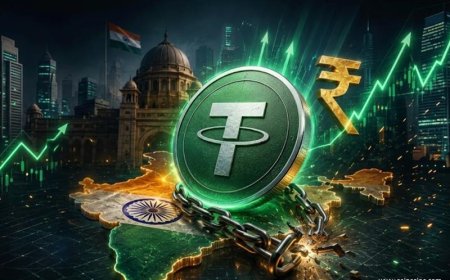
India's USDT premium has climbed above 8.5%, highlighting growing pressure in the country's cryptocurrency market as tighter regulatory scrutiny on crypto remittances reduces the available supply of dollar-backed stablecoins. The sharp premium reflects increasing demand for Tether (USDT) while supply struggles to keep pace, creating a significant price gap compared to global markets.
The development underscores how regulatory actions can directly impact stablecoin liquidity, cross-border payments, and crypto trading activity in one of the world's fastest-growing digital asset markets.
USDT Premium Climbs Above 8.5%
According to recent market data, USDT is trading at a premium of more than 8.5% in India, meaning buyers are paying substantially more than its intended $1 peg.
The premium reflects an imbalance between demand and available supply rather than a loss of confidence in the stablecoin itself.
Key market observations:
- USDT premium exceeds 8.5%
- Demand for dollar-backed stablecoins continues rising
- Local supply has tightened significantly
- OTC markets are experiencing higher trading activity
- Cross-border crypto payments face increasing pressure
Why Is USDT Trading at a Premium?
The recent increase appears to be linked to stricter oversight of crypto-related remittance channels.
Authorities have intensified efforts to monitor cross-border crypto transactions, making it more difficult for stablecoins to enter domestic markets.
As a result:
- Available USDT liquidity has declined.
- Buyers compete for limited supply.
- OTC trading volumes have increased.
- Stablecoin prices have moved above their global value.
The premium reflects market scarcity rather than changes in USDT's underlying reserve backing.
Impact of India's Crypto Remittance Crackdown
India has recently strengthened oversight of cryptocurrency transactions through enhanced compliance requirements and anti-money laundering (AML) measures.
These initiatives aim to:
- Improve financial transparency
- Combat illicit fund transfers
- Strengthen regulatory compliance
- Monitor cross-border digital asset flows
- Protect the financial system
While the measures support regulatory objectives, they have also created short-term liquidity constraints within the domestic stablecoin market.
Why USDT Matters in India
USDT plays a central role in India's crypto ecosystem.
It is widely used for:
Crypto Trading
Most Indian traders use USDT as the primary trading pair for Bitcoin, Ethereum, and altcoins.
Cross-Border Transfers
Stablecoins provide a fast and cost-effective method for international value transfers.
Dollar Exposure
Many investors hold USDT as protection against cryptocurrency volatility.
OTC Transactions
Institutional investors and high-net-worth individuals frequently use USDT for large crypto settlements.
Market Effects of the Premium
An elevated USDT premium creates several consequences for traders.
Higher Trading Costs
Investors pay more to acquire dollar-backed stablecoins.
Reduced Arbitrage Opportunities
Limited supply makes price differences harder to eliminate.
Increased OTC Demand
Private trading desks become more important as exchange liquidity tightens.
Liquidity Challenges
Crypto exchanges may experience lower stablecoin availability during periods of high demand.
Institutional and Regulatory Implications
The premium demonstrates how local regulations can significantly influence digital asset markets.
For regulators, the situation highlights:
- The importance of balanced crypto policies
- Growing demand for regulated stablecoins
- The need for efficient cross-border payment infrastructure
For institutional investors, it reinforces the importance of monitoring regional liquidity conditions before executing large transactions.
Could the Premium Decline?
The premium may gradually narrow if:
- Stablecoin supply improves
- Regulatory clarity increases
- OTC liquidity expands
- Cross-border settlement channels normalize
- Institutional participation grows
Until then, traders may continue paying above-market prices for USDT within India.
Final Thoughts
India's USDT premium exceeding 8.5% highlights the growing influence of regulation on cryptocurrency markets. While stronger oversight aims to improve financial transparency and compliance, it has also tightened stablecoin supply, pushing local prices well above global levels.
As India continues refining its digital asset framework, the balance between regulatory enforcement and market efficiency will be crucial. For investors and businesses relying on stablecoins, liquidity conditions and policy developments are likely to remain key factors shaping the country's crypto landscape.
(FAQs)
Why is USDT trading above $1 in India?
Strong demand combined with tighter local supply has pushed USDT to trade at a premium above its intended dollar peg.
What caused the stablecoin shortage?
Reports suggest increased scrutiny of crypto remittance channels has reduced the availability of USDT within India.
Does the premium mean USDT has lost its peg?
No. The premium reflects local market conditions and supply constraints rather than a failure of USDT's underlying reserves.
Who is most affected?
Crypto traders, OTC desks, exchanges, and businesses using USDT for cross-border transactions may face higher acquisition costs.
Can the premium return to normal?
Yes. Improved liquidity, increased stablecoin inflows, or clearer regulations could reduce the premium over time.
Why are stablecoins important in crypto markets?
Stablecoins provide price stability, facilitate trading, enable cross-border payments, and serve as a bridge between traditional finance and digital assets.